 BioTron Tower™
 Pitch Perfect, Brussels · 30 Nov – 1 Dec 2026
Industrial CO2 in. Saleable biomass out.
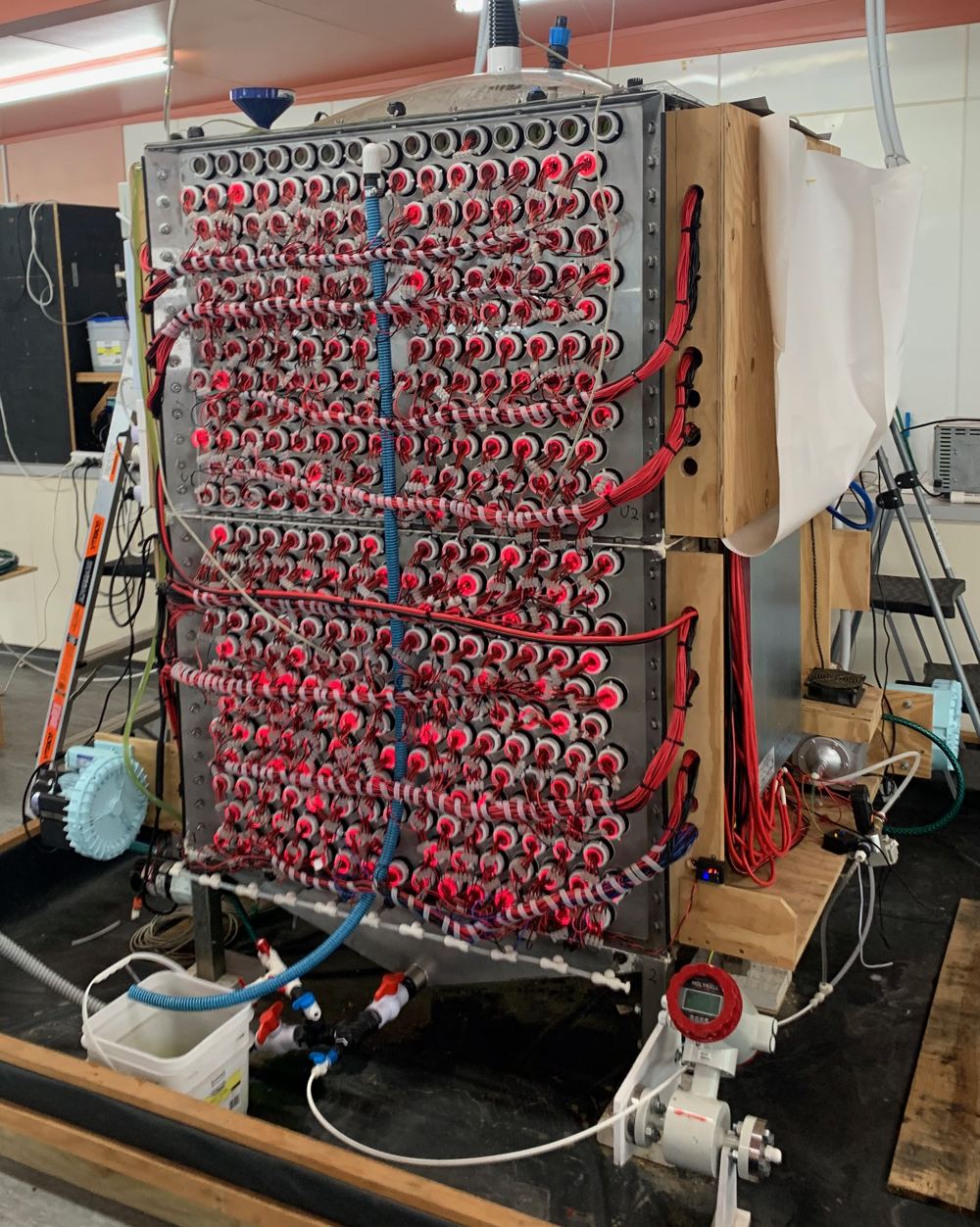
The BioTron Tower is a modular, closed photobioreactor designed to sit at an industrial emitter's site and grow non-food microalgae on its CO2 off-gas. The biomass is sold as feedstock for bioplastics, industrial lubricants and sustainable aviation fuel precursors.
A bioreactor that goes where the emissions are
Instead of piping CO2 away to be stored, the BioTron Tower uses it on site as the carbon source for algae growth.
- 01 · Capture
Off-gas is fed in
CO2-rich flue gas from the host plant is bubbled through the culture at the base of each tower.
- 02 · Grow
Lit from the inside
A closed column with internal illumination is designed to bring light to the whole culture, independent of sunlight and weather.
- 03 · Harvest
Biomass is drawn off
Microalgae biomass is harvested from the tower for downstream processing.
- 04 · Sell
Feedstock to industry
The biomass goes to makers of bioplastics, industrial lubricants and SAF precursors.
Paid for by product, not by carbon credits
Product revenue
The business case rests on selling biomass to industrial buyers, rather than on carbon-credit prices that the operator can't control.
Retrofit on site
Towers are designed to be installed at an existing emitter, close to the gas source, without rebuilding the plant.
Modular
Capacity grows by adding towers, so a site can start small and scale as results come in.
Where we are, and what comes next
Development is staged. Each step has to hit agreed results before money is committed to the next.
-
100 LBuilt & trialled
First prototype
Trialled the tower geometry and internal illumination in New Zealand.
-
1,500 LBuilt
Scaled unit, now in the UK
Built and operated in New Zealand, then shipped to the UK. Recommissioning and baseline testing at the University of Cambridge's Algal Innovation Centre is the first validation step.
-
ValidationSeeking partner
Real flue gas, real buyer
Performance testing on industrial off-gas, with an off-taker confirming the biomass meets their specification.
-
4,000 LPlanned
Demonstration unit
Built once 1,500 L results meet target. Supports full techno-economic and life-cycle analysis.
-
Site scalePlanned
Industrial demonstration
Multiple towers installed at a partner emitter's site.
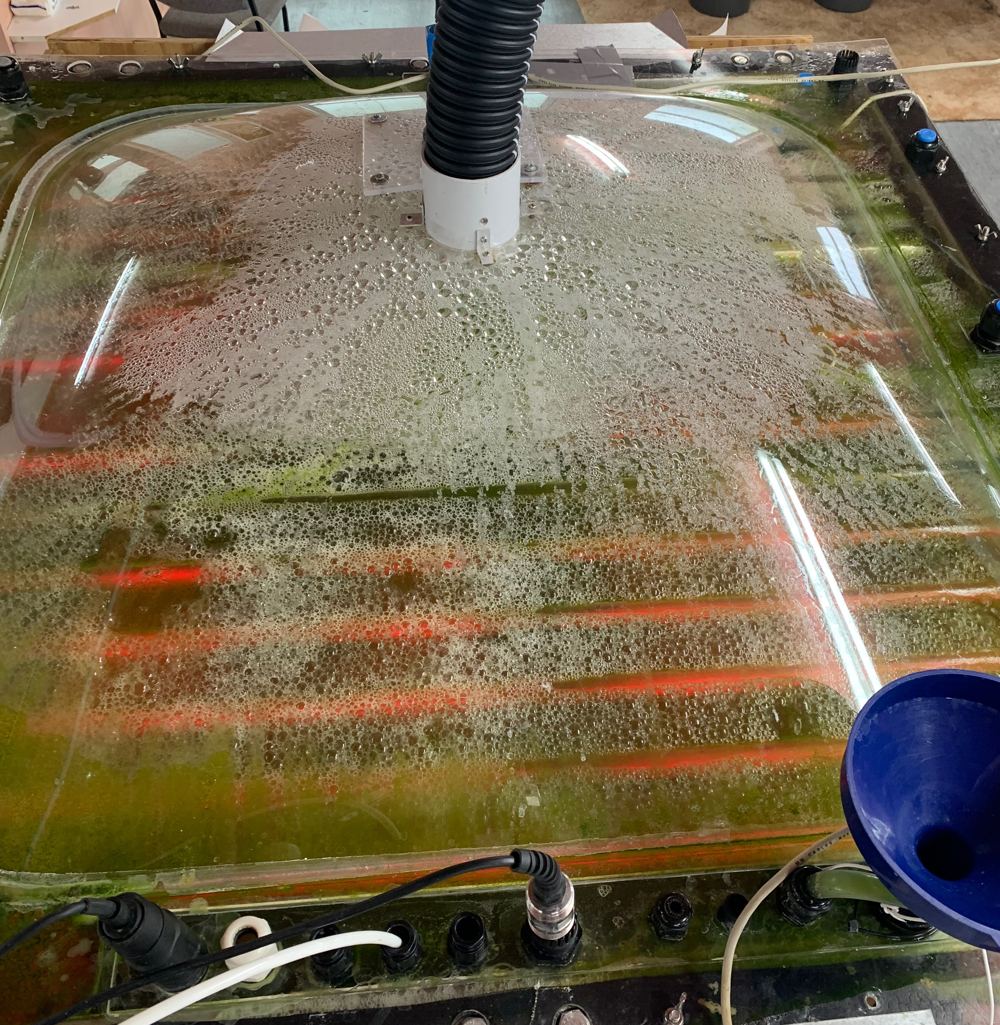
Biomass concentration in a culture sample from the 1,500 L unit, with around 20% lipid content.
Independent analysis, Callaghan Innovation (NZ), 2022Validation targets
These are the targets the validation programme is designed to test. They are not yet measured results.
Two ways in
Host the validation, or buy the output
- Supply real flue gas for performance testing
- Set the biomass specification for your product line
- First position for site-scale deployment
Join a staged development round
- Funding released against stage gates, not up front
- Each gate tied to measured results
- Blended with grant funding where available
Who's behind it
Martin Lawton
Director, Carbon Harvest LtdInvolved with the technology since 2006, when he met its inventor through the Dongtan eco-city project. Background in major infrastructure and regeneration programmes.
Robert Fisk
Director, Carbon Harvest LtdBased in New Zealand, where the 100 L and 1,500 L units were built and run.
University of Cambridge
Supporting partnerThe 1,500 L unit is at the Algal Innovation Centre, ahead of recommissioning and baseline testing.
Meet us in Brussels
We're at Pitch Perfect in Brussels on 30 November and 1 December. Get in touch to arrange a meeting there or a call afterwards.